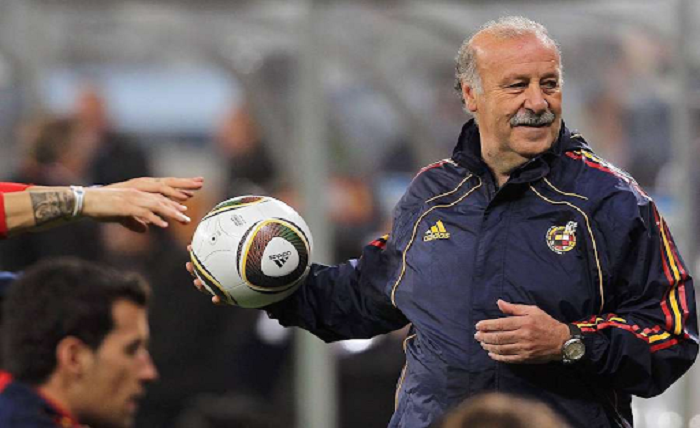
Vicente del Bosque is widely regarded as one of football’s greatest coaches, leading Spain to victory at the 2010 FIFA World Cup and UEFA Euro 2012. He also enjoyed major success with Real Madrid. Before the next edition of the Euro or the FIFA World Cup takes place, you may also want to try the 1xBet crash game too.
His tactical philosophy combined 2 elements: technical excellence with tactical flexibility. Del Bosque also adapted his ideas to the strengths of his players, allowing talented individuals to express themselves within a disciplined collective structure. There is an extremely entertaining crash game that you can try at 1xBet while waiting for the next match of the Spanish national side too.
In 1st place, a defining feature of Del Bosque’s teams was their commitment to ball possession. Building on the foundations established by Luis Aragonés, Spain controlled matches with 3 elements:
- short and accurate passes;
- intelligent movements;
- and constant support around the ball.
However, Del Bosque viewed possession as a means to control the rhythm of the game rather than an objective in itself. His teams were encouraged to accelerate attacks whenever space appeared and to maintain patience when quick opportunities were unavailable.
Having a compact squad
Positional discipline was a 2nd essential principle. Every player understood their tactical responsibilities, ensuring that the team remained compact both in possession and when defending. He had 4 great defenders at his disposal who provided balance between creativity and defensive awareness. Those 4 names were Xavi Hernández, Andrés Iniesta, Sergio Busquets and Xabi Alonso. Their intelligent positioning allowed Spain to dominate central areas while limiting opponents’ opportunities to counterattack.
Defensively, Del Bosque emphasized collective organization. His teams defended as a unit, reducing spaces between the lines and forcing opponents into wide areas where attacks became less dangerous. When possession was lost, players reacted immediately to recover the ball. This achieved 2 goals: minimize transitions and maintain territorial control throughout the match.
Another hallmark of Del Bosque’s tactical approach was versatility. He was willing to modify formations and player roles according to the opponent without abandoning his core philosophy. Whether using a traditional striker or deploying a false 9, he approached football games with 3 goals in mind. They were: creating numerical superiority in midfield, retaining control of possession, and generating high-quality scoring opportunities through intelligent movement rather than direct play.